Which surface patterns are available on EVA foam mats? Newin Best offers cross, five-stripe, leaf and tatami textures, alongside rubber-top, wood-look, printed and textile finishes. Start with the intended use, then compare physical samples before choosing a surface for your product range.
A surface photograph is useful for shortlisting designs. It cannot tell you everything about how a finished mat feels, how its edges fit, or how it performs in your customer's setting. This guide separates the visual choices from the checks to make before ordering.
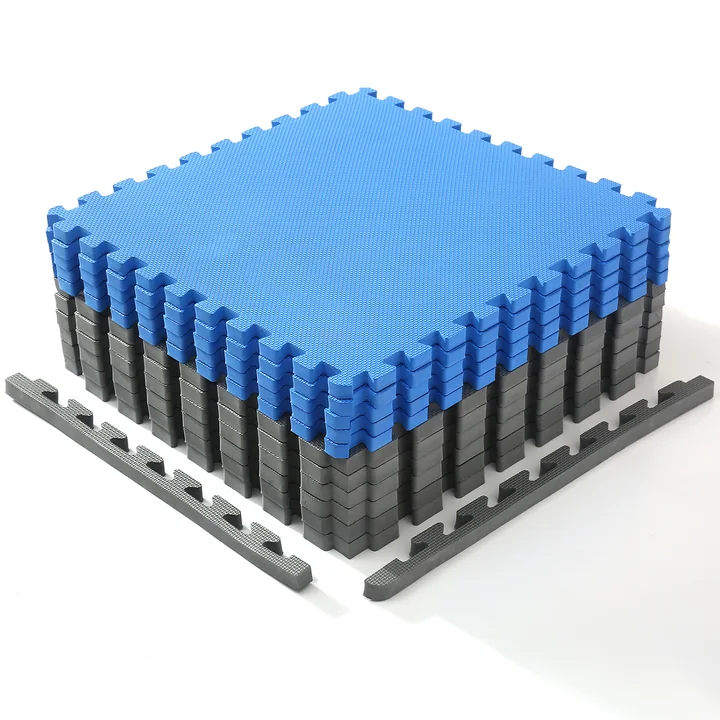
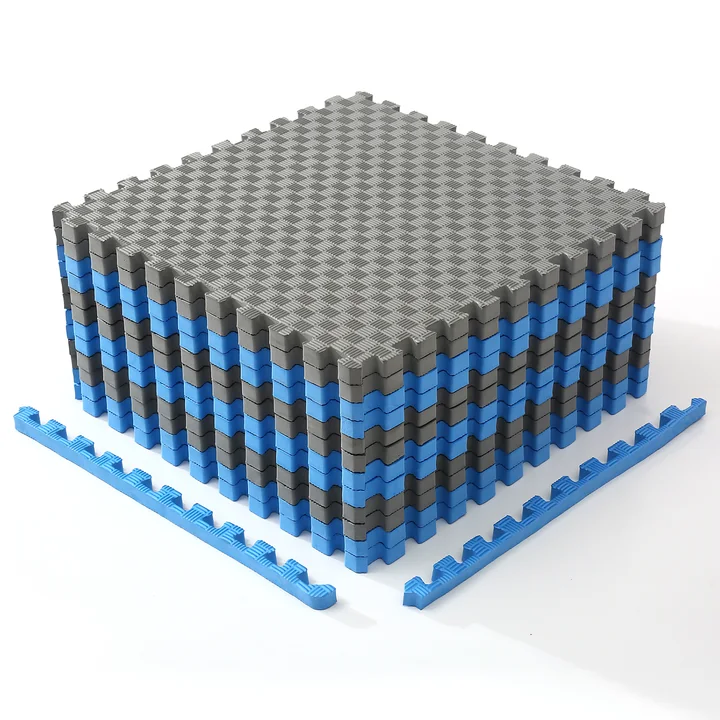
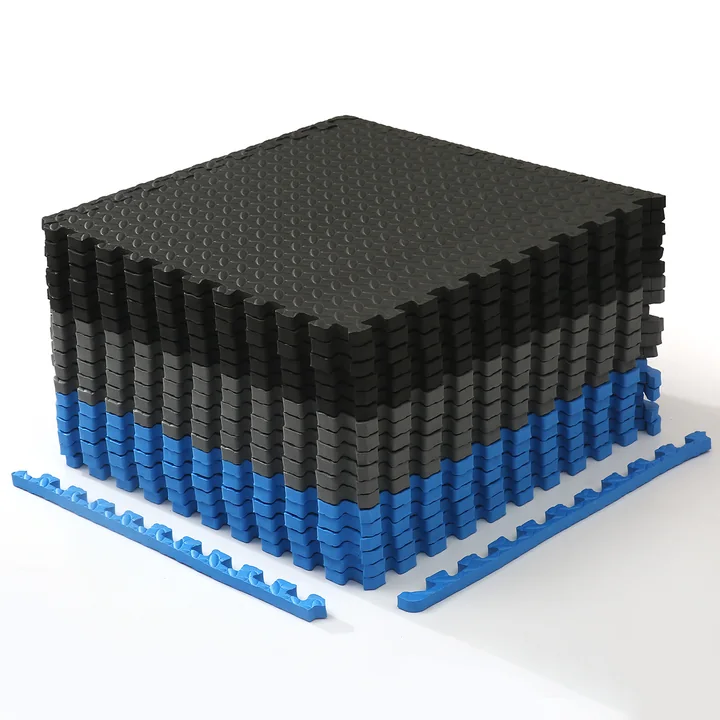
Four textured EVA mat options, side by side
Use the comparison below to choose samples to review. It describes the design options and purchasing questions, rather than ranking one texture as universally better.
| Surface | Design to compare | What to check on the sample |
|---|---|---|
| Cross pattern | A repeated cross-textured surface | Feel across the raised pattern, appearance under lighting, and how the texture meets at joined edges. |
| Five stripes | A repeating striped texture | Pattern direction after rotating or joining tiles, plus the finished appearance with edge strips. |
| Leaf pattern | A raised leaf-style texture | Surface feel in the intended use and how easily your proposed cleaning method reaches the recesses. |
| Tatami | A tatami-style textured finish | The complete model, thickness and supporting performance information for the intended training activity. |
Texture and surface material are different choices
An embossed pattern is not the same thing as an added surface layer. A rubber-top EVA mat combines a rubber surface with an EVA base. Woodgrain mats use a wood-look finish; Stylish Playmat uses printed OPP film with heat lamination. A plush mat has a textile surface.
When comparing quotations, ask suppliers to identify both the base material and the finished surface. Two mats with a similar colour or photograph may have different constructions. Keep those details in the sample approval record so that the quotation and production order describe the same product.
How to select a surface for your project
For indoor exercise layouts
Describe the activity, footwear, underlying floor and any equipment that will sit on the mats. Evaluate sample tiles in those conditions. For equipment use, discuss load and indentation requirements separately from the surface pattern. For training, specify the movements and any required performance tests before selecting a model.
For decorative or retail collections
Compare the joined layout as well as a single tile. Check colour consistency, pattern direction and the border appearance. For printed designs, approve the artwork and a physical production reference; a screen image is not a reliable colour standard.
For play spaces
Choose the design alongside the intended age group, set contents and destination-market documentation. A pleasant texture or attractive print does not establish age suitability. Confirm the selected finished model and the relevant documents before creating packaging claims.
A practical sample approval checklist
- Identify the sample: record the model, surface, colour, tile dimensions and thickness.
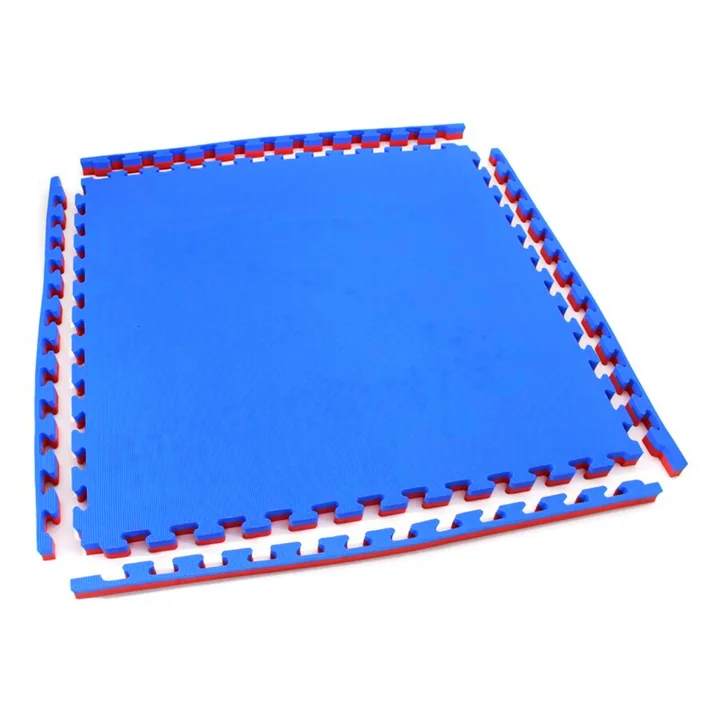
- Assemble a small layout: check fit, gaps, pattern direction and the supplied edge strips on the intended floor.
- Review the feel: compare samples under the planned conditions, including footwear or direct contact where applicable.
- Try the proposed cleaning routine: use the supplier's care instructions and check the result after the sample dries. Confirm compatibility before applying a cleaning chemical.
- Review the finished set: verify tiles per set, edge pieces, labels and packaging against the quotation.
- Retain an approved reference: record any required tests and keep a signed-off sample for the order.
Request a comparable quotation per set
Newin Best quotes EVA foam mats per set. State the number of tiles and edge pieces included in each set. Floor coverage can help plan a layout, but it does not replace the per-set quotation unit.
For a useful comparison, send the selected surface, tile size, thickness, colours, pieces per set, packaging, order quantity in sets and destination market. Include any artwork or specific performance requirements. Keep these specifications the same when comparing alternative textures, or ask the supplier to clearly list each difference.
See the EVA foam mat quotation guide for more detail, or send your sample and quotation request.
Frequently asked questions
Does a deeper texture automatically provide better grip?
No. Pattern appearance alone is not a performance result. Assess the finished mat in the intended conditions and request relevant test information where a grip claim is required.
Can I mix different surface patterns in one layout?
Confirm compatibility before ordering. Similar-looking tiles may have different connectors, dimensions or thicknesses. Ask for samples of the exact models and assemble them together.
Which texture is easiest to clean?
There is no universal answer from a photograph. The surface construction, recesses, type of dirt and cleaning method all matter. Compare samples using the proposed care routine rather than relying on the pattern name.
Is a tatami texture enough to choose a martial arts mat?
No. The activity and the finished mat's performance requirements matter as well. Discuss the intended training use and review the specific model before making a purchasing decision.
Compare our EVA mat styles Request samples and a per-set quote