Specify the training activity
Tell the supplier which activities, footwear and movement patterns the floor will support. Identify whether the project includes throws, falls, grappling or striking, and ask the responsible instructor or facility team to define the needed performance and evidence.
Check the complete model
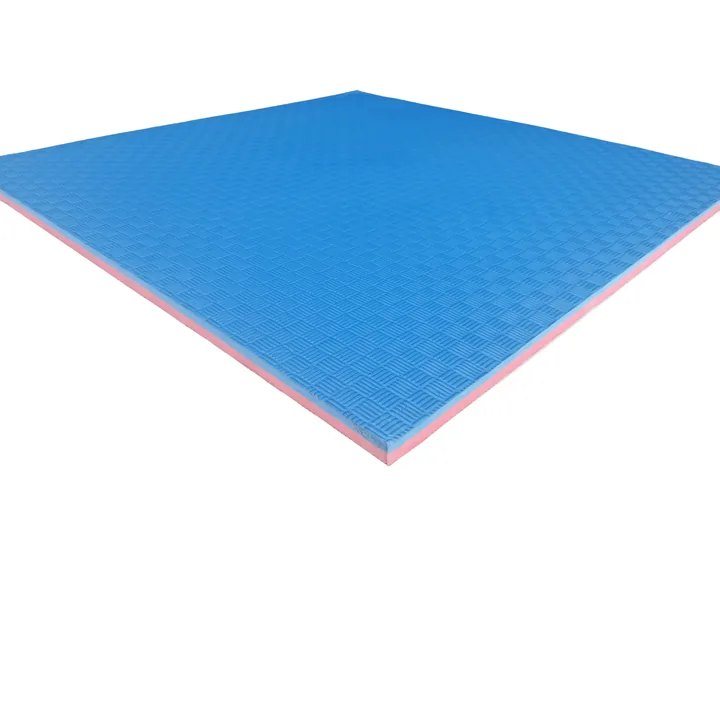
Review foam construction, thickness, surface texture, dimensions and joining profile. Newin Best confirms EVA foam density 70 kg/m³ and hardness Shore C 34–36; these values are not a sports certification or impact-attenuation result. Request relevant model testing where the project requires it.
Review layout and installation
Confirm the subfloor, perimeter restraint, floor transitions and obstacles. Assemble a sample area and check joint movement and the intended activities. Agree whether tiles from the chosen model can be combined with existing flooring.
Approve use and maintenance instructions
Ask for the cleaning method and inspection plan. Check edges, surface wear and joint security during use. Do not describe a general EVA model as universally suitable for judo, BJJ or competition use without the required evidence and project approval.