
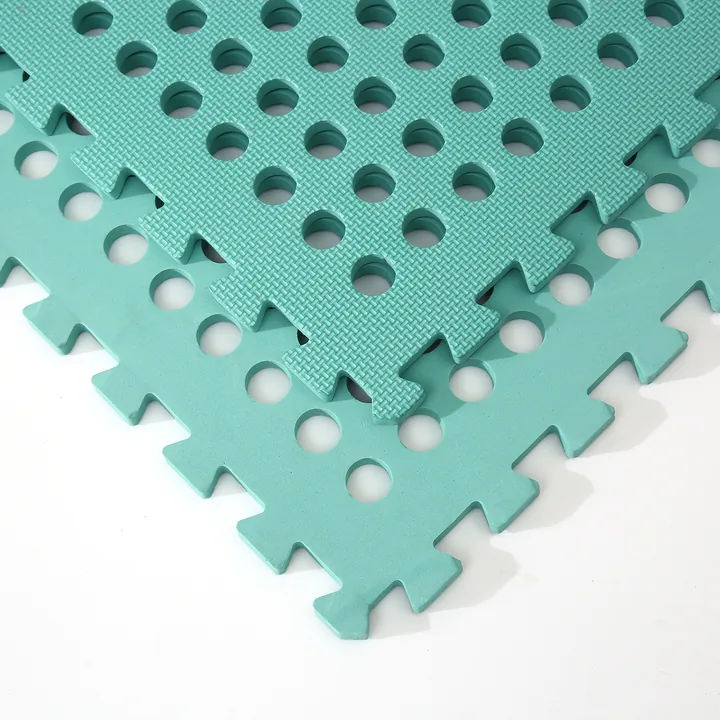
Review the underlying drainage
Check the floor slope, drain locations and how water will move beneath the layout. A perforated mat over a non-draining substrate can still retain water underneath. Plan access for cleaning and inspection and avoid obstructing drains or floor transitions.
Evaluate traction under the actual conditions
Wet traction depends on the surface, water, contamination, footwear and use. Request relevant finished-model test information and review a sample under the intended conditions. Do not use texture or holes as a substitute for a documented slip-performance requirement.
Confirm chemical and weather exposure
Tell the supplier about cleaning products, pool chemicals, sunlight and expected temperature exposure. Ask for evidence specific to the model before claiming chlorine resistance or UV durability. The standard EVA foam density and hardness do not establish these properties.
Plan installation and maintenance
Check joint security and perimeter transitions, then confirm the cleaning instructions. Inspect underneath removable tiles and replace damaged pieces. For commercial wet areas, have the project team confirm the flooring and access requirements before approval.