
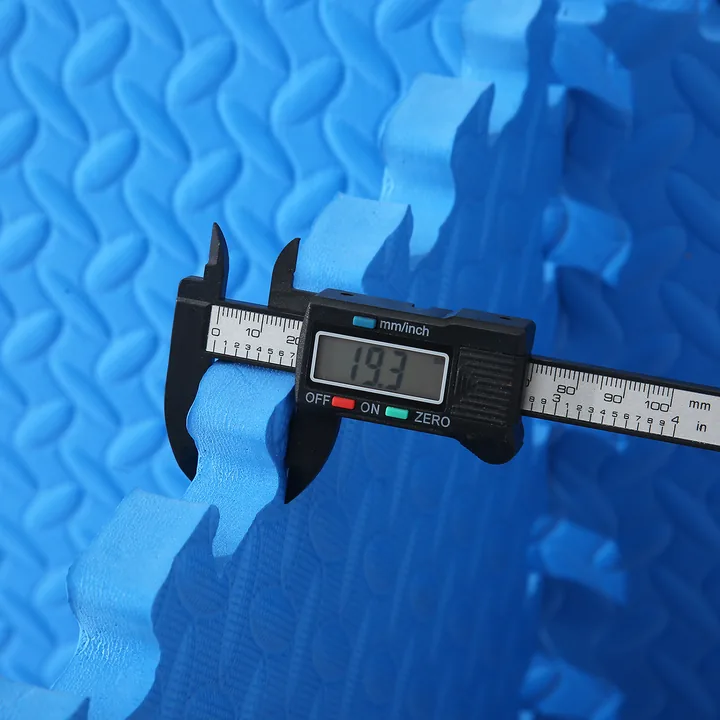
Measure the selected model
Agree the nominal size, thickness and tolerances. Check several sample pieces using an agreed measurement method and conditions. Ask how the supplier verifies foam density and hardness; Newin Best confirms 70 kg/m³ and Shore C 34–36 for its EVA foam.
Inspect surface and joint consistency
Compare color, texture, surface-layer adhesion where relevant and cut edges. Assemble a sample grid and check whether tiles join consistently. Document the acceptance criteria for visible marks, dimensional variation and joint fit before approving production.
Review the evidence behind claims
An odor observation, squeeze test or photograph cannot prove chemical compliance or durability. Request the reports required for the finished model and intended market. Review the tested sample, method and scope instead of relying on a broad “certified” label.
Confirm packing and inspection
Check tiles per set, edge strips, labels, cartons and shipping marks. Agree production inspection stages and retain an approved reference sample. Define how deviations will be addressed so quality review has a clear basis.