EVA vs XPE Foam Mats: Key Differences and Which One to Choose

Buyers often ask us whether they should order EVA or XPE foam mats. Both are closed-cell polyethylene-family foams, they look similar in photos, and suppliers sometimes use the names interchangeably — which is exactly why the confusion costs money. After producing both materials for 20+ years, here is the honest comparison we give our own customers.
What the two materials actually are
EVA (ethylene-vinyl acetate) foam is made by foaming an EVA copolymer compound, typically with a rubber-elastic feel, higher density (70–180 kg/m³ in mats) and excellent shock absorption. XPE (cross-linked polyethylene) is polyethylene that has been chemically or electronically cross-linked during foaming. It is lighter — usually 30–80 kg/m³ — with a finer, more uniform cell structure and a smoother, silkier surface.
Head-to-head comparison
| Property | EVA foam mat | XPE foam mat |
|---|---|---|
| Sourcing guide range | 70–180 kg/m³ | 30–80 kg/m³ |
| Cushioning / impact absorption | Excellent — the reason it is used in judo and gym flooring | Moderate — soft but bottoms out faster |
| Surface texture options | Very rich: tatami, wood grain, cross pattern, five stripes, suede | Limited, mostly smooth or embossed |
| Initial odor | Slight, airs out in days (REACH-compliant recipes are near odorless) | Very low |
| Price per m² (same thickness) | Lower | Higher (cross-linking adds cost) |
| Best use | Gyms, martial arts, kids play, trade shows | Camping mats, packaging, car headliners |
Which one should you choose?
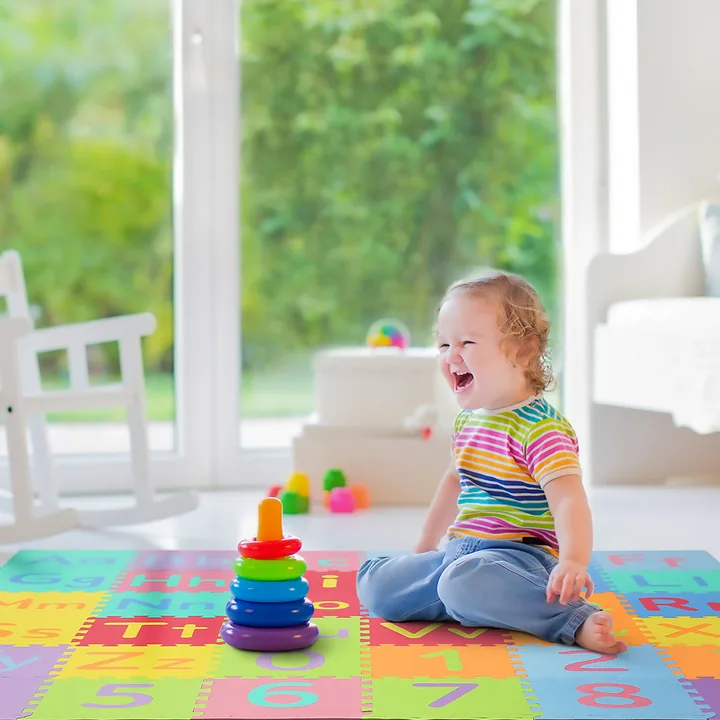
Choose EVA when people fall on the floor, drop weights, or the mat must survive years of commercial use: home and commercial gyms, gym flooring, martial arts tatami, and baby play areas. Choose XPE when weight and insulation matter more than impact absorption — camping pads, luggage liners, industrial packaging.
One warning from the factory floor
Some quotes labeled “EVA” are actually EPE (expanded polyethylene) — the cheap white pearl foam used in fruit boxes. EPE is 20–30 kg/m³, tears easily and yellows within months. If a price looks too good, ask for the measured density of a finished tile and weigh the sample yourself. We publish density for every tile we ship; our standard 20 mm gym tile is 150 kg/m³.
Tell us your application and target price — we will recommend the right material, send a sample within 3 days, and quote FOB or DDP.
