
EVA Foam Mat Thickness Guide: How to Choose 10mm, 20mm or 40mm for Your Space
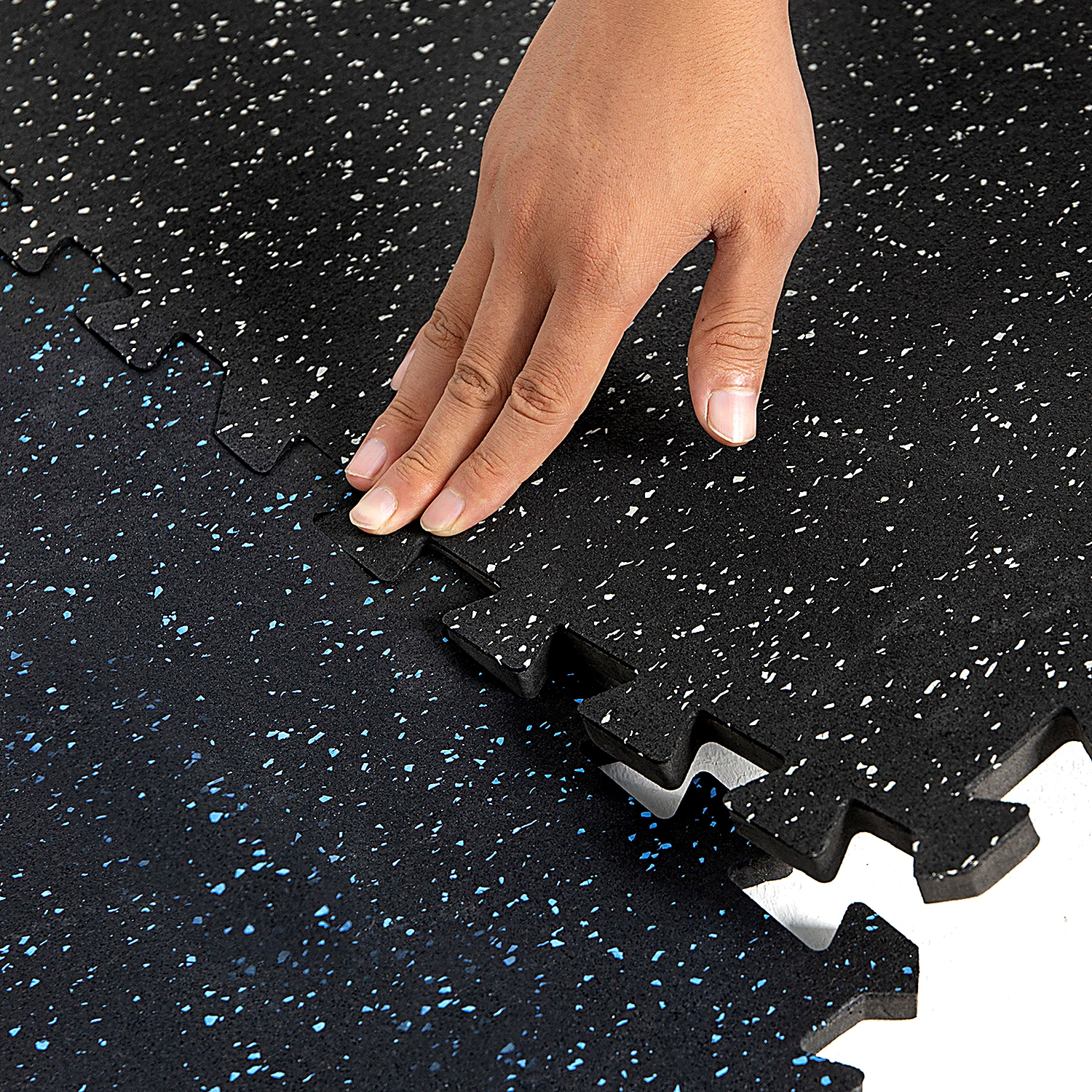
When buyers search for EVA foam mats, the first spec they ask about is usually thickness. After 20+ years of supplying gyms, schools and home users, we can tell you that thickness matters — but density matters more. This guide walks through the practical differences between 10 mm, 20 mm and 40 mm EVA mats and shows you the numbers behind each choice.
Quick reference: thickness by use case
| Use case | Recommended thickness | Recommended density |
|---|---|---|
| Baby / Kids Play Mat | 10–12 mm | 70–100 kg/m³ |
| Yoga / Pilates | 8–15 mm | 80–110 kg/m³ |
| Home Gym | 10–20 mm | 90–120 kg/m³ |
| Gym / Fitness | 15–25 mm | 100–130 kg/m³ |
| Trade Show / Exhibition | 10–20 mm | 70–100 kg/m³ |
| Workshop / Garage | 15–25 mm | 100–130 kg/m³ |
Why density matters more than thickness
Two EVA tiles can both be 20 mm thick and perform very differently. The difference is the foam density, measured in kg/m³. A 20 mm tile at 90 kg/m³ contains about 1.8 kg of material per square meter; a 20 mm tile at 160 kg/m³ contains about 3.2 kg. That extra 1.4 kg of polymer is what gives the higher-density tile its resilience under load and its longer service life.
The test most buyers miss: compression set. After 24 hours of static load at 50% deflection, a high-density EVA tile recovers to >95% of original thickness; a low-density tile may recover to 80% or less, meaning permanent indentation under heavy equipment. Ask your supplier for a compression set value — anything under 15% is acceptable for gym use.
10 mm vs 20 mm vs 40 mm: real-world tradeoffs
10–12 mm: kids and light home use
Lightweight, cheap to ship, easy to cut. Comfortable enough for a baby's knees and for yoga. Will compress permanently under a loaded squat rack — do not use in a serious gym. Typical weight 1.5–2.0 kg per 60 cm tile.
20 mm: the versatile middle ground
Handles dumbbells, kettlebells, cardio equipment and a moderate barbell load. Deadens sound well (footfall noise drops by ~10 dB on a concrete slab). Works for most home gyms, play areas and trade show booths. The sweet spot for roughly 80% of buyers.
30–40 mm: heavy commercial use
Use this when you have Olympic bars, plate-loaded machines, or a high-traffic commercial space. Heavier to ship (4–5 kg per 60 cm tile at 40 mm) and more expensive, but it is the only honest answer for a power rack or a busy gym. Pair with a 6–10 mm rubber underlay for bar drops.
How to measure density when sourcing
Density is mass divided by volume. To verify a supplier's claim:
- Weigh one tile in grams (a kitchen scale works).
- Measure length × width × thickness in cm and convert to m³.
- Density (kg/m³) = grams ÷ 1000 ÷ m³.
For a 60 × 60 × 2.0 cm tile weighing 1,200 g, density is 1.2 ÷ 0.0072 = 167 kg/m³. If the supplier claims 130 kg/m³, ask why the actual weight is higher — they may be using a denser recipe than their spec sheet, which is good news for you.
At Newin Best we publish density for every product line. Our standard gym tile is 20 mm at 150 kg/m³, and our commercial-grade 40 mm tile is 180 kg/m³ with a 12% compression set.
Tell us the room size and equipment you are flooring — we will recommend a thickness and density, send a sample within 3 days, and quote FOB or DDP.